


Rose red’s HEX code is #C21E56. It sits at hue 340 — the corridor between red and magenta — with 73% saturation and 44% lightness, giving it red’s energy with a cooler, more romantic cast. Beauty brands, lifestyle products, and any interface that wants passion without alarm reach for exactly this zone of the wheel.
Below you get every rose red code format, the five computed harmony palettes, and exact WCAG contrast ratios against white, black, and dark surfaces. Every number is computed from the hex, so you can move values straight into design tokens without rounding.
What Color Is Rose Red, Exactly?
Rose red is a deep pink-leaning red mapped to #C21E56, with RGB rgb(194, 30, 86). Red dominates, blue contributes a third as much, and green nearly disappears — the recipe for a red that has been cooled with magenta rather than warmed with orange.
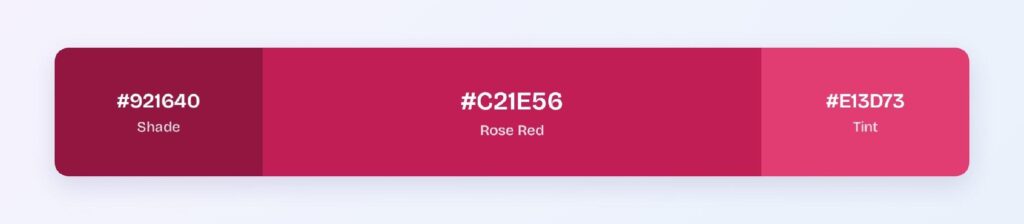
The name comes straight from the flower, and the color performs the same job: romance with substance. Where pink reads youthful and crimson reads urgent, rose red lands between them — warm, confident, and grown-up.
For design systems, rose red typically slots in as a brand primary for beauty, dating, wellness, and boutique commerce, or as an expressive accent inside a neutral system that needs one emotional note.
Is Rose Red a Real Color?
Yes, though it isn’t a CSS named color, which is why multiple hex codes circulate. #C21E56 is the most widely cited standard; a vivid variant, #FF033E (sometimes labeled American rose), pushes the same hue to full brightness. Both are legitimate — they’re two intensities of one idea.
For product work, anchor your token to one value and document it. This article computes everything from #C21E56 because the deeper version is the one that survives contrast testing as a text and button color.
Is Rose Red Pinkish?
Slightly, and by design. Hue 340 sits twenty degrees past pure red on the road to magenta, which is exactly where pink undertones begin. At rose red’s 44% lightness the effect reads as depth rather than pastel softness — lighten the same hue past 80% and you’d arrive at true pink.
That positioning is practical: rose red darkens into wine and lightens into blush without ever leaving its hue, giving you a full romantic ramp from a single token.
Rose Red on Digital Screens
On white, rose red scores 5.81:1 — a comfortable AA pass for body text, which few colors this vivid achieve. On black it manages 3.61:1, large text only.
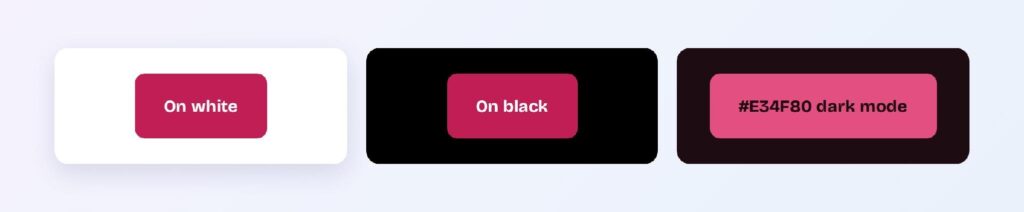
The computed dark variant #921640 reaches 8.71:1 on white, clearing AAA for maximum-compliance contexts. In dark mode, the brightened #E34F80 on the rose-cast surface #1D0C12 delivers 5.12:1 — an AA pass that keeps body-level rose text viable at night, something most saturated reds can’t offer.
The Interface Elements Rose Red Handles Best
Rose red is expressive but disciplined: it passes the contrast tests that let it do structural work, not just decoration.
Buttons and CTAs
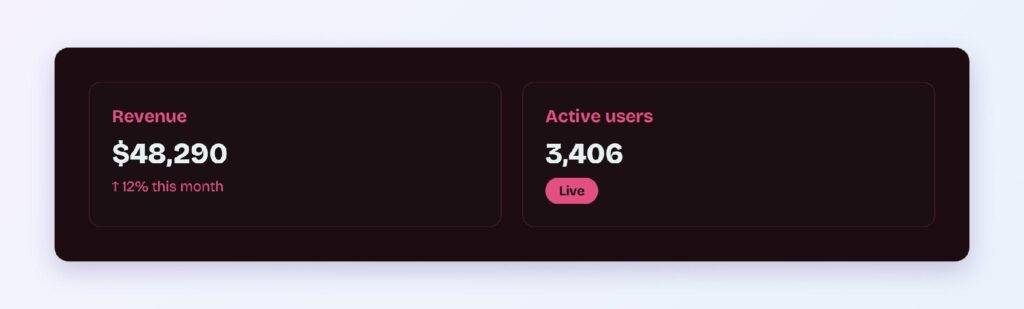
White text on #C21E56 passes AA at 5.81:1, and the hover state #921640 deepens to AAA at 8.71:1. That two-step gives you a fully compliant interactive pair out of the box. You can use Visily’s Theme feature to apply it across every button state at once.

Status Badges
Rose red badges suit emotional and promotional states — favorites, featured items, limited offers — where true red would wrongly signal an error. The hue distance from your error red keeps the two vocabularies separate.

Data Visualizations
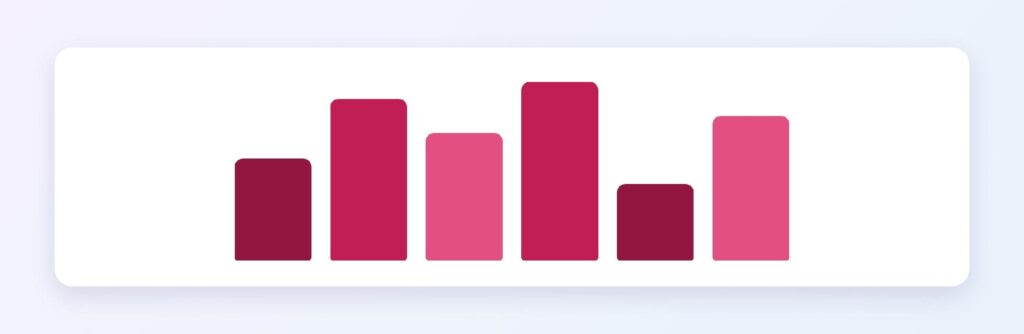
The monochromatic ramp from #E45585 through #C21E56 down to #741233 builds a sequential scale for engagement metrics, sentiment, and any dimension where warmth should rise with the value.
Dark Mode Accents
With #E34F80 clearing AA on dark surfaces, rose red keeps its identity after sunset — headings, icons, links, and even body-level highlights stay compliant.
Five Rose Red Palettes From Color Math
Every scheme below is computed from #C21E56 at hue 340.
Monochromatic
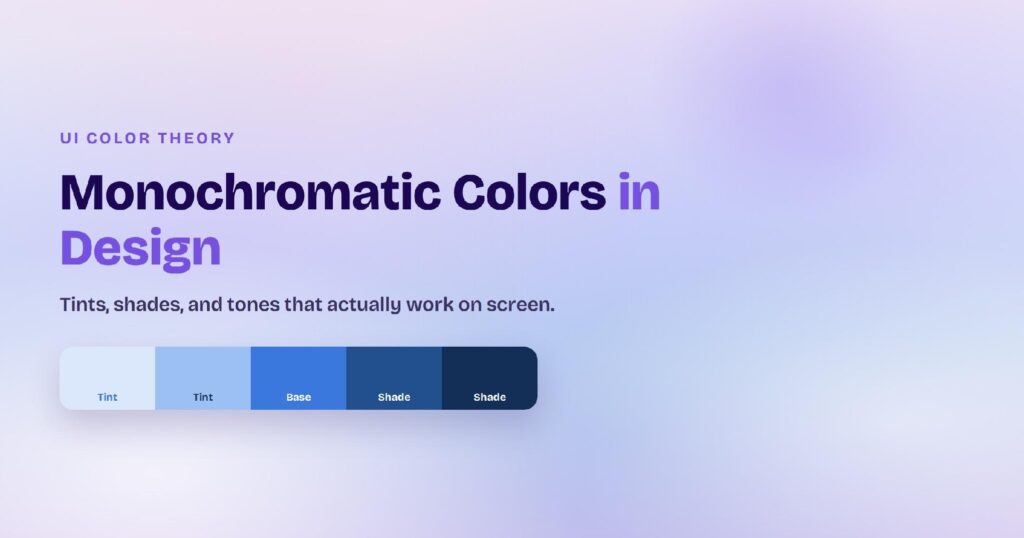
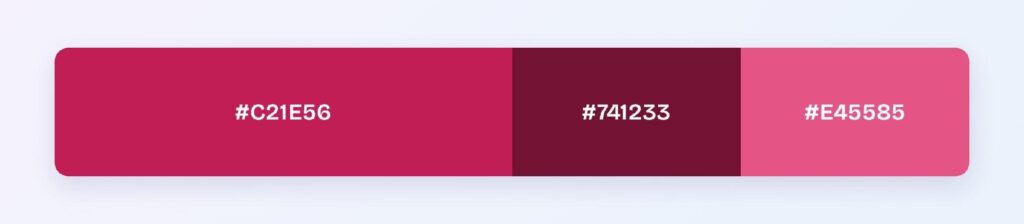
The set: #C21E56, #741233, and #E45585. One hue from wine to blush covers a complete brand system — beauty and lifestyle products can run their entire interface inside this ramp.
Analogous
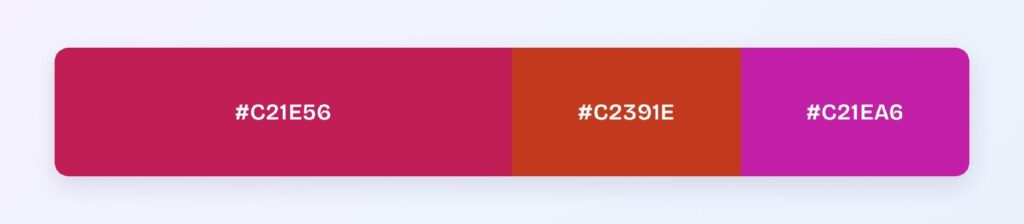
The set: #C21E56 with #C2391E (toward vermilion) and #C21EA6 (toward magenta). Three warm neighbors at matched depth create a sunset range for editorial and fashion contexts.
Complementary
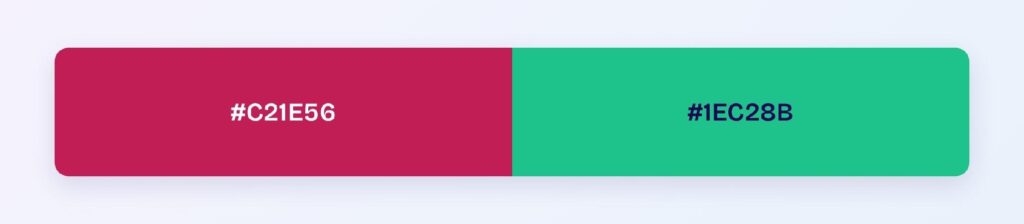
The set: #C21E56 against #1EC28B — a spring green-teal. The pairing is fresh and floral: the exact contrast of a rose against its stem, which makes the green a natural success-state partner in a rose-primary system.
Triadic
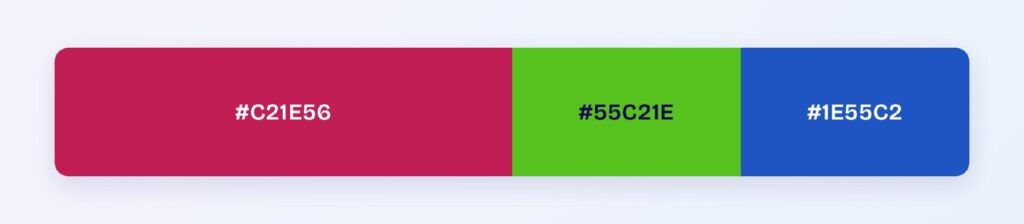
The set: #C21E56, #55C21E (leaf green), and #1E55C2 (cobalt). Three evenly spaced hues at matched saturation suit playful multi-category products that still want cohesion.
Split-Complementary
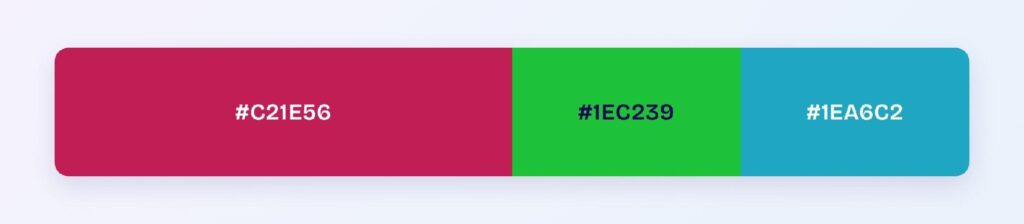
The set: #C21E56 with #1EC239 and #1EA6C2. You keep the botanical contrast with two cooler landings — the default choice when the full teal complement feels too tropical.
What Color Is Similar to Rose Red?
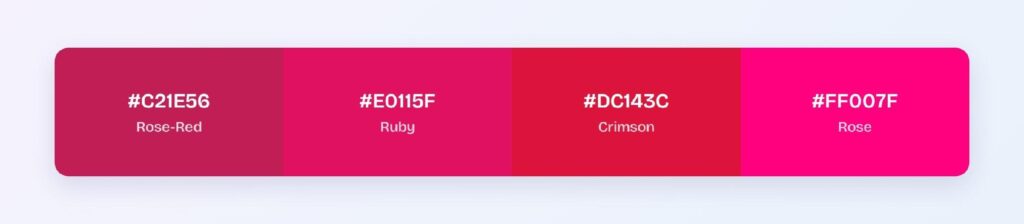
The three closest named colors are ruby (#E0115F), crimson (#DC143C), and rose (#FF007F). Ruby brightens and pinkens, crimson warms back toward true red, and rose pushes fully into the red-magenta midpoint. Crimson is the swap when you need more urgency; ruby when you need more sparkle.
The Pairings That Make Rose Red Work
The computed best partner is #1EC28B, the spring-green complement. Beyond it, rose red thrives against deep charcoal, cream, and soft gold — the palette of a florist’s card rack.
Run the 60-30-10 split: 60% cream or white surfaces, 30% rose red for structure and primary actions, 10% green or gold accent. Inverting it — rose-dominant with neutral text panels — works for bold beauty brands.
Pairings to Skip
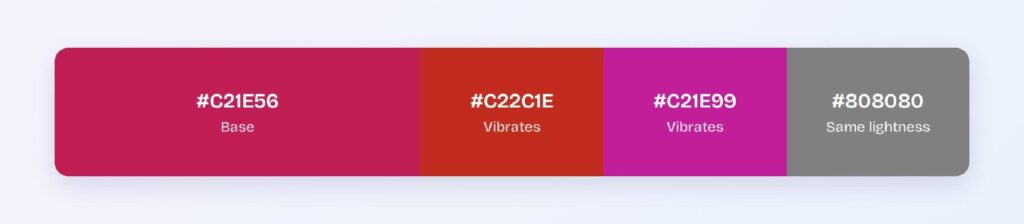
Avoid the near-neighbors #C22C1E and #C21E99. Both sit within 45 degrees at the same depth, so boundaries against #C21E56 shimmer instead of resolving.
Also keep rose red away from your semantic error red: at only twenty degrees apart, users will conflate the two unless lightness separates them clearly.
Rose Red and Accessibility
Rose red is one of the stronger vivid colors for compliance: #C21E56 on white passes WCAG AA at 5.81:1, and the dark variant #921640 clears AAA at 8.71:1. Build the pair into your tokens and both tiers are covered.
Red hues sit inside the red-green confusion range affecting roughly 1 in 12 men, so never let rose red alone separate states from green — add icons or labels wherever the two meet.
Rose Red in Every Color Format
All six formats describe the same color:
- HEX #C21E56 — the default for CSS and design tokens.
- RGB rgb(194, 30, 86) — use RGBA for translucent romantic overlays.
- HSL hsl(340, 73%, 44%) — programmatic shifts; the wine and blush variants are lightness moves away.
- HSB 340, 85, 76 — what Figma’s and Photoshop’s pickers show.
- CMYK 0, 85, 56, 24 — print translation; expect the magenta lean to soften slightly on paper.
Wrapping Up
Rose red (#C21E56) earns its place as an expressive primary that still passes the tests: AA on white at 5.81:1, an AAA dark variant, a dark mode accent that keeps working, and a botanical complement that hands you success states for free. Every number above is computed color math.
Put it to work in Visily‘s Theme feature: load the rose ramp, pair it with its spring-green complement, and ship a romantic interface that holds up to an accessibility audit today.